

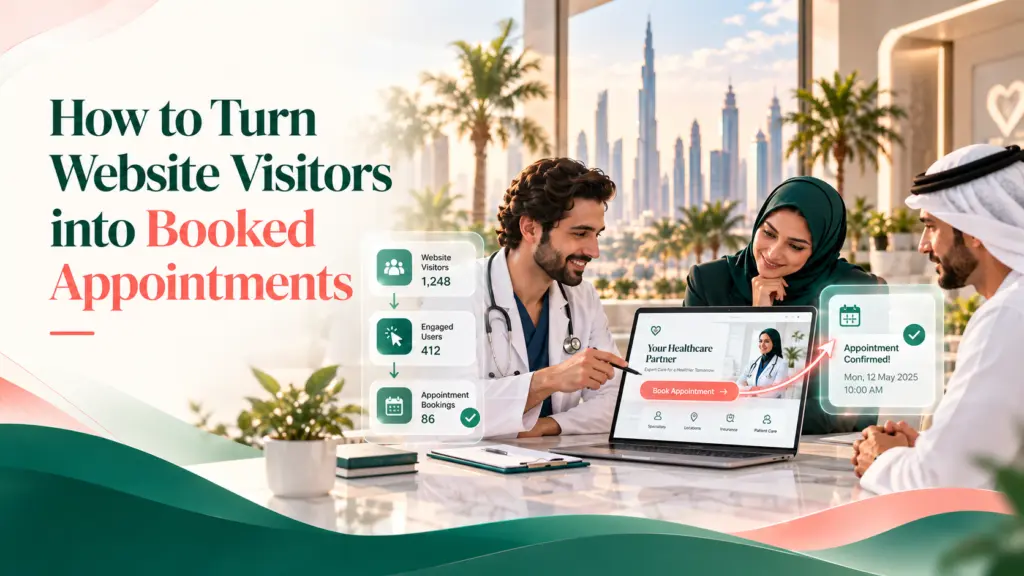
Discover why healthcare campaigns generate attention but not appointments, and how to diagnose targeting, trust, booking and follow-up gaps.
Traffic is not the same as patient growth
A healthcare campaign can attract impressions, clicks and enquiries without creating booked appointments. The first step is to define the desired outcome: qualified enquiries, appointments attended, appropriate service-line growth or stronger retention. Each requires a different measurement plan. A high click-through rate may be encouraging, but it cannot tell you whether patients received the right information or completed a booking.
1. Check whether your message reaches the right audience
Start with the service, location and patient need rather than a broad demographic. A dental implant campaign, for example, should answer different questions from a family medicine campaign. Review search terms, geographic targeting, landing-page language and the channels generating relevant enquiries. Avoid unsupported promises, patient-targeting practices that compromise privacy, or sensational health claims.
2. Identify the trust gap
Patients may investigate qualifications, clinical services, accessibility, insurance acceptance, location and appointment availability before contacting a provider. Give them accurate, easy-to-find answers. Introduce the clinical team appropriately, explain the care pathway without guaranteeing outcomes, and keep contact details consistent across the website and business profiles. Trust is built through transparent information, not aggressive sales copy.
3. Remove friction from booking
Test the journey on an ordinary mobile phone. Can visitors find the relevant service, understand the next step and reach a working booking or enquiry channel quickly? Check page speed, form length, tap targets, language choice and whether phone and WhatsApp links lead to the right team. If calls go unanswered or leads wait too long for a reply, increased advertising spend will not solve the problem.
4. Track the entire funnel
Create a simple dashboard for qualified enquiries, enquiry-to-booking rate, booking-to-attendance rate, cost per qualified enquiry and relevant service-line performance. Connect reports to your appointment system where lawful and feasible, but minimize patient data and keep personal health details out of general advertising analytics. Compare performance by channel and location, not just total spend.
5. Improve through controlled experiments
Choose one bottleneck per test: a clearer headline, more relevant landing page, shorter enquiry form or improved reception follow-up. Document a baseline, change one meaningful factor and review enough data before deciding what worked. Communicate outcomes responsibly; variations in seasonality, demand and clinic capacity can affect results.
A practical 30-day reset
In week one, audit service pages and attribution; in week two, verify booking and reception workflows; in week three, refine one priority campaign and landing page; in week four, review qualified enquiries and actual bookings. A useful marketing partner coordinates the marketing team with operations rather than optimizing ads in isolation.
Build growth around the patient experience
Summit Vision approaches healthcare marketing as a connected system of strategy, messaging, digital performance and conversion experience. If your campaigns produce attention but not meaningful appointments, begin with an end-to-end assessment instead of automatically raising the budget.
Planning your next stage of healthcare growth? Explore Summit Vision and discuss a strategy designed around your organisation’s priorities.



Leave a Reply